
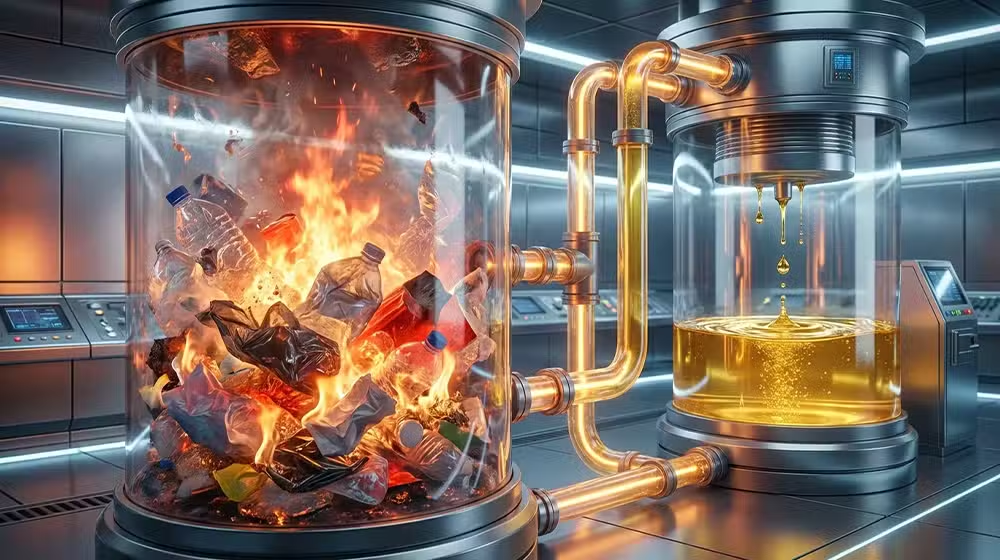
Scientists have developed a new solar-powered method that can convert plastic waste into fuel-like substances, including petrol-like hydrocarbons, hydrogen, and syngas. The innovation offers a potential solution to two major global challenges at once: plastic pollution and rising energy demand.
The research was led by PhD researcher Xiao Lu at the University of Adelaide. The team has demonstrated a process that uses sunlight as a driving force to break down and transform discarded plastic materials into useful chemical products.
Unlike traditional recycling methods, which often downgrade plastic quality, this solar-driven approach treats plastic waste as a chemical resource rather than a burden. The process converts carbon-rich and toxic plastic materials into valuable outputs that can be reused in energy production and industrial applications.
Among the key outputs of this method are hydrogen gas, syngas (a mixture of hydrogen and carbon monoxide), and hydrocarbon-based fuels that resemble petrol. These products can potentially be used as cleaner energy alternatives, depending on further refinement and scaling.
Researchers believe this breakthrough could significantly reduce the environmental impact of plastic waste. Millions of tons of plastic are produced globally every year, much of which ends up in landfills or oceans, causing long-term ecological damage.
By using sunlight as an energy source, the system also reduces reliance on fossil fuels for the conversion process itself. This makes the technology more sustainable compared to conventional waste-to-fuel methods that require high energy input.
The study highlights that plastics, often considered non-degradable pollutants, can instead be reinterpreted as a valuable feedstock for clean energy systems. This shift in perspective could reshape how industries approach waste management in the future.
However, experts note that the technology is still in the research stage. Large-scale industrial application will require further development, cost optimization, and testing before it can be used commercially.
If successfully scaled, this innovation could play a key role in circular economy models, where waste materials are continuously reused rather than discarded.
The findings have generated strong interest in both environmental and energy research communities, as the world continues to search for sustainable solutions to pollution and energy shortages.