
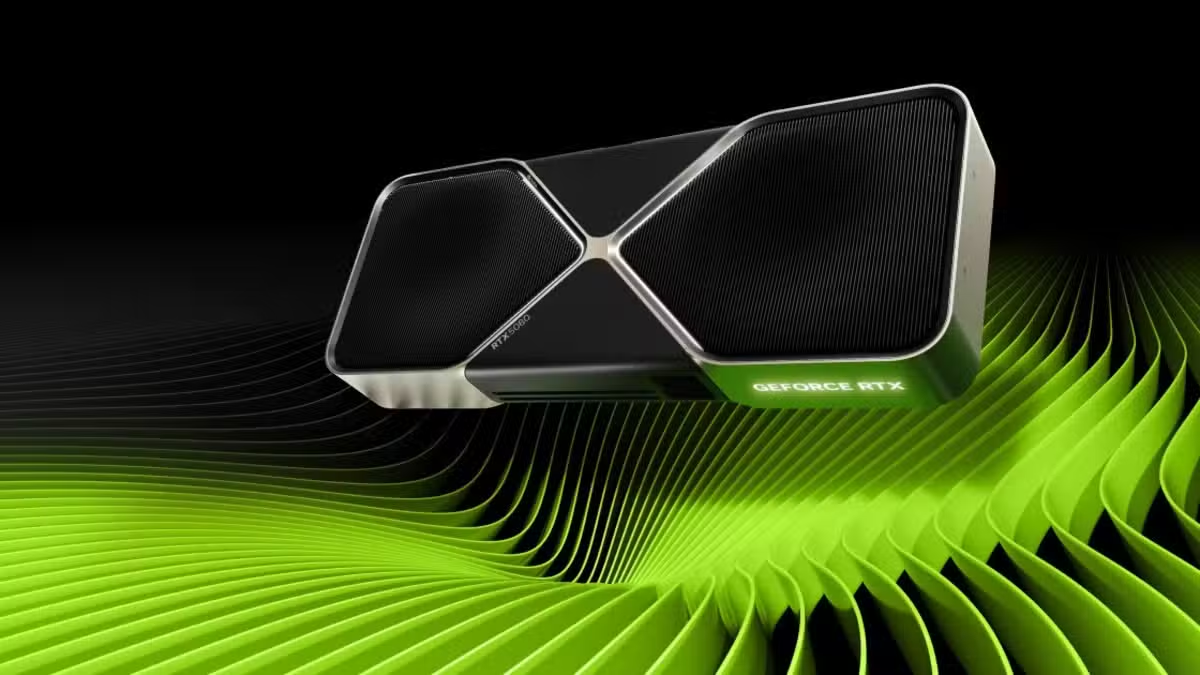
Nvidia has reportedly canceled plans to launch a new 24GB version of its GeForce RTX 5080 graphics card in China, with rising memory costs making the upgrade too expensive to bring to market. The graphics card was reportedly scheduled to arrive in January 2027 but may no longer move forward.
The reported decision could disappoint PC gaming enthusiasts and professionals who were expecting a higher-memory version of Nvidia’s popular RTX 5080. Instead, the company is expected to continue producing the existing 16GB model.
The cancellation also highlights the growing cost of advanced memory technology and the challenges hardware manufacturers face when developing more powerful graphics cards.
According to reports, the proposed RTX 5080 24GB model was designed to offer additional video memory without introducing a different graphics processor. The upgraded card was expected to use the same GPU as the current RTX 5080, with changes primarily focused on its memory configuration.
The existing model features eight 2GB GDDR7 memory chips, providing a total of 16GB of graphics memory. The planned 24GB version would have replaced those components with eight 3GB GDDR7 chips.
Although the change appeared relatively straightforward, the cost of the larger memory chips reportedly created a significant financial challenge.
Technology publication Gazlog reported that individual 3GB GDDR7 memory chips cost approximately three times as much as their 2GB counterparts. This substantial price difference may have made the proposed graphics card considerably more expensive to manufacture.
The increased production cost could also have affected the final retail price, making the upgraded RTX 5080 less attractive to potential buyers.
An estimate cited by Gizmochina suggested that the 24GB model could have carried a price tag of approximately $2,000. That would have been nearly twice the $999 US launch price of the 16GB RTX 5080 Founders Edition.
However, Nvidia never officially announced pricing for the rumored 24GB graphics card. Therefore, the estimated $2,000 figure should not be considered a confirmed retail price.
The reported cancellation suggests that Nvidia may have decided the additional memory would not justify the potential increase in manufacturing costs and consumer pricing.
For gamers, the difference between 16GB and 24GB of VRAM could have been important, particularly for demanding games, high-resolution textures, and applications that require substantial graphics memory.
Additional video memory can also benefit professionals working with artificial intelligence, 3D rendering, video production, and other GPU-intensive workloads. These users often need more memory to handle larger projects and complex computing tasks.
However, increasing VRAM alone does not automatically guarantee better gaming performance. The graphics processor, memory bandwidth, software optimization, and other hardware specifications also play important roles.
For now, Nvidia is reportedly expected to maintain production of the existing GeForce RTX 5080 16GB model rather than introduce the more expensive variant.
The situation also raises questions about the future pricing of graphics cards featuring next-generation memory technology. If higher-capacity GDDR7 chips remain expensive, manufacturers could face similar challenges when developing upgraded models.
Although Nvidia has not officially confirmed the reported cancellation, the development indicates that memory costs could become a major factor in determining the price and availability of future high-end GPUs.