US Citizen Hunts Rare Kashmir Markhor for $270,000 in Chitral Under Legal Trophy Program
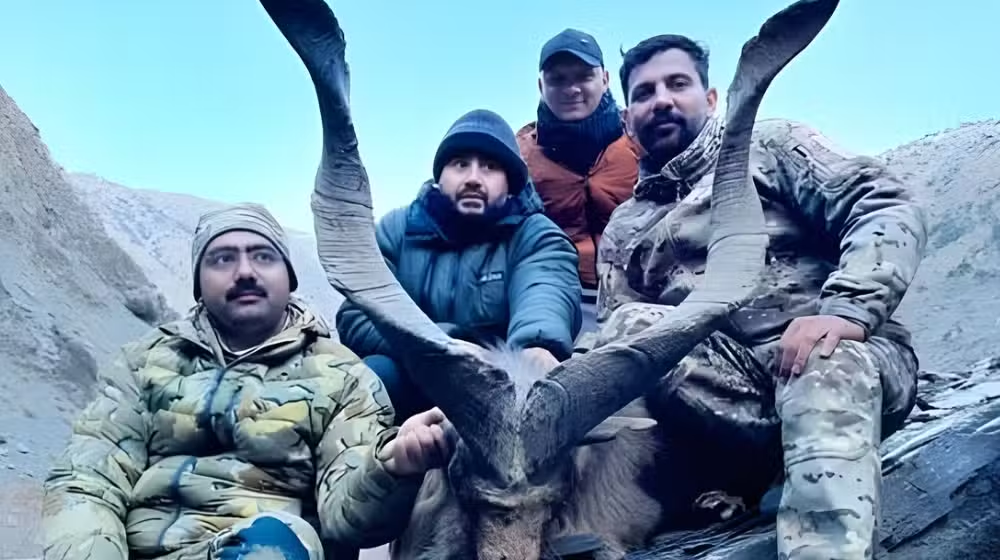
A United States citizen has legally hunted a rare Kashmir Markhor in Chitral after obtaining a trophy hunting permit worth $270,000, according to officials from the Khyber Pakhtunkhwa Wildlife Department. The hunt has drawn international attention due to the high permit value and the conservation-focused framework under which it was conducted.
The hunting activity took place in the Shasha–Thoshi Community Managed Game Reserve, one of Pakistan’s most prominent conservation areas. Wildlife authorities confirmed that the entire process was carried out under strict monitoring, ensuring full compliance with national wildlife laws and internationally recognized trophy hunting standards.
Divisional Forest Officer (Wildlife) Chitral, Farooq Nabi, stated that the hunt occurred within the Thoshi Shasha Conservancy and was supervised directly by officials from the Wildlife Department. He emphasized that all legal, environmental, and ethical requirements were met, highlighting Pakistan’s regulated approach to trophy hunting of protected species.
The Kashmir Markhor, Pakistan’s national animal, is considered a globally significant and highly prized species. The Wildlife Department revealed that the permit was awarded through a competitive international bidding process, attracting interest from overseas hunters. The winning bid of $270,000, approximately Rs. 756 million, reflects the growing global valuation of the species and the structured conservation model Pakistan has adopted.
Officials noted that the trophy hunting program is designed not only to regulate hunting but also to support conservation efforts. A substantial portion of the permit revenue is allocated to local communities living near conservation zones. These funds are used for community development, habitat protection, and wildlife management initiatives, creating a direct incentive for locals to protect endangered species rather than engage in illegal hunting.
Pakistan’s trophy hunting framework has gained recognition in recent years for contributing to the recovery of species such as the Markhor. Wildlife experts argue that controlled hunting of a limited number of older, non-breeding animals helps fund conservation while maintaining healthy population levels. Surveys conducted by wildlife authorities have shown a steady increase in Markhor numbers in areas where community-managed conservation programs are active.
The high-value permit also highlights Pakistan’s potential as a destination for regulated wildlife tourism. International interest in legal trophy hunting has brought foreign exchange into the country while promoting Pakistan’s biodiversity on a global stage. Authorities believe that transparent bidding processes and strict enforcement enhance credibility and attract responsible international participants.
Despite occasional public debate surrounding trophy hunting, wildlife officials maintain that Pakistan’s model aligns with international conservation practices. They stress that without sustainable funding mechanisms, protecting remote habitats and endangered species would be significantly more challenging.
The Chitral hunt stands as one of the most expensive trophy hunting permits issued in the region, underscoring both the rarity of the Kashmir Markhor and the economic value placed on conservation-driven wildlife management in Pakistan.