Venezuela Defies US Oil Blockade Amid Rising Tensions; 4 Killed in Latest US Naval Strike
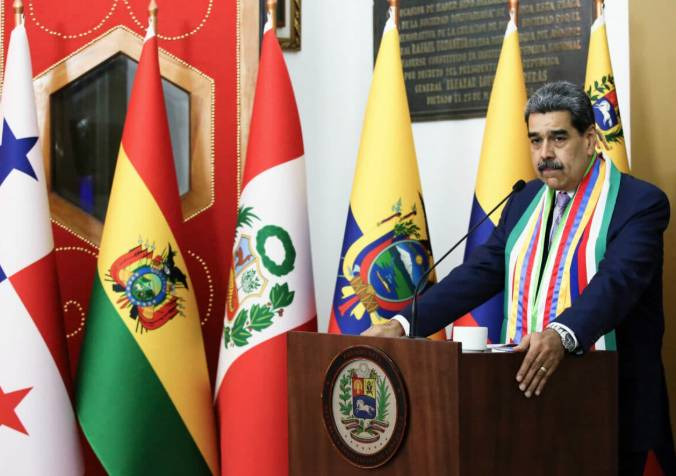
Venezuela has responded defiantly to US President Donald Trump’s announcement of a total oil blockade, insisting that crude exports continue unaffected despite mounting economic and military pressure. The announcement, part of Trump’s campaign to undermine President Nicolas Maduro, escalates tensions in the Caribbean and highlights Venezuela’s reliance on petroleum exports amid a decade-long economic crisis.
State oil company Petroleos de Venezuela (PDVSA) confirmed that “export operations for crude and byproducts continue normally,” adding that oil tankers linked to its operations are sailing with full security. Trump, however, declared a “total and complete blockade of all sanctioned oil tankers” entering or leaving Venezuela, while warning that the country is surrounded by the “largest Armada ever assembled in the History of South America.”
Maduro held talks with UN Secretary-General Antonio Guterres, emphasizing the “escalation of threats” from Washington. Guterres urged restraint on both sides to maintain regional stability. Meanwhile, Venezuela’s military declared it was “not intimidated” by US threats. China, Venezuela’s key oil customer, also expressed support, with the Chinese foreign minister calling on all nations to defend sovereignty and national dignity.
The blockade follows a series of US operations targeting vessels alleged to be involved in drug trafficking. Last week, the M/T Skipper was seized in a high-profile raid, and on Wednesday, US forces struck another vessel in the Pacific Ocean, killing four “narco-terrorists,” according to the US Southern Command. The ongoing strikes have claimed 99 lives since September, fueling Caracas’ claims that the operations serve as a pretext for regime change and control over Venezuelan oil.
Venezuela’s economy, already under severe strain, faces further risk from the US measures. The country’s oil production has dropped from over three million barrels per day in the early 2000s to around one million today. Analysts warn that the blockade could disrupt a vital economic lifeline, with short-term impacts potentially severe, while medium-term effects will depend on the evolving geopolitical situation.
Regional leaders are also expressing concern. Mexican President Claudia Sheinbaum criticized the UN’s limited involvement, urging the international body to step in to prevent potential bloodshed. Meanwhile, Maduro continues to assert that Venezuela’s oil exports remain secure and unaffected, even as US forces maintain a major military presence in the Caribbean and eastern Pacific.
The situation underscores growing geopolitical friction in the region, with oil, military deployments, and anti-narcotics operations intersecting in a tense standoff that has significant economic and humanitarian implications.