
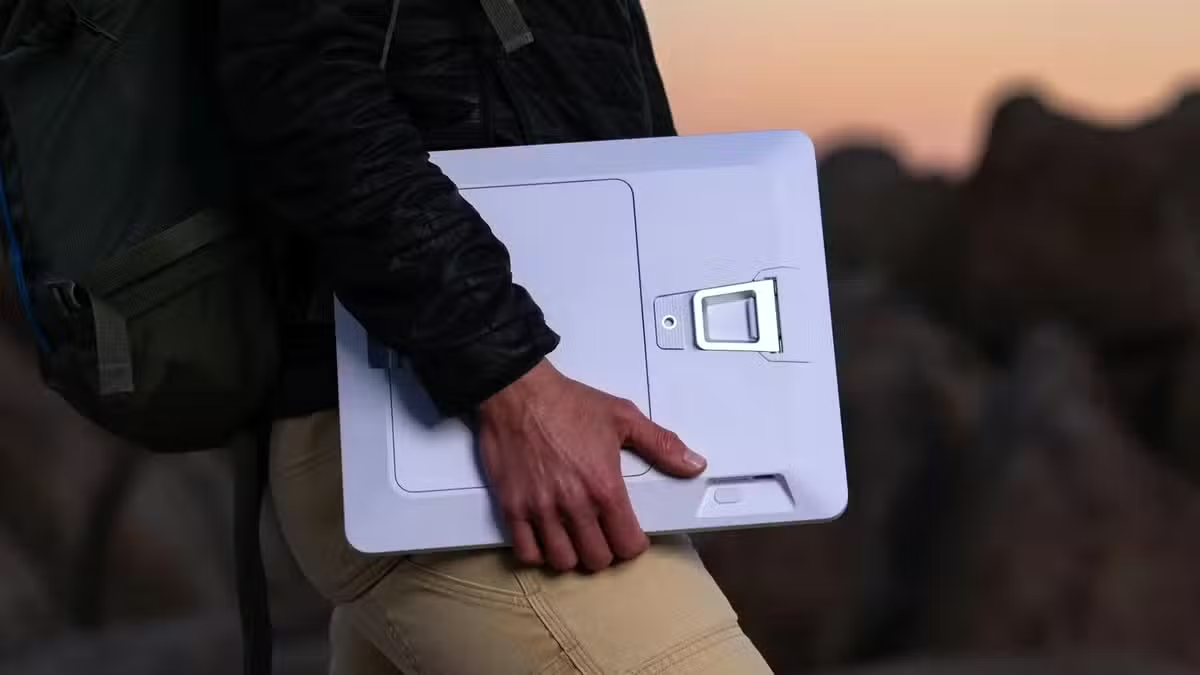
SpaceX has introduced the Starlink Mini 2, a new portable satellite internet device designed to provide internet connectivity even when conventional electricity is unavailable. The second-generation model features an integrated removable battery, allowing users to access satellite internet for up to 4.5 hours on a full charge.
The new device combines a satellite dish, Wi-Fi router and battery into a compact unit roughly the size of a laptop. Its portable design is intended to make satellite internet more convenient for people who need connectivity while travelling, working outdoors or dealing with electricity interruptions.
One of the biggest improvements over the original Starlink Mini is the addition of a built-in battery. The previous model required an external power source to operate, limiting its convenience in locations where electricity was not readily available.
With the Starlink Mini 2, SpaceX aims to address this limitation by offering an independent power solution. According to the reported specifications, the removable battery can operate the device for up to 4.5 hours without requiring a direct connection to an electricity supply.
The removable design also provides additional flexibility. Users can extend their internet access by replacing a depleted battery with another fully charged unit. SpaceX plans to sell additional batteries separately, allowing customers to carry backup power when travelling or working in remote locations.
This feature could be particularly useful for people who frequently experience power interruptions or work in areas without reliable electricity. Travellers, outdoor professionals and emergency response teams could also benefit from having a portable internet solution that does not depend entirely on conventional power infrastructure.
USB-C Charging Adds Another Power Option
Apart from its integrated battery, the Starlink Mini 2 also supports operation through a USB-C connection. The device can use a 60W power source, providing another way to keep the satellite terminal running without relying on its internal battery.
This additional power option gives users greater flexibility when choosing how to operate the device. Compatible power banks and other suitable USB-C power sources could potentially help maintain connectivity when a conventional electricity connection is unavailable.
SpaceX has also reportedly reduced the device’s thickness despite incorporating a battery into its design. This makes the second-generation model slimmer than its predecessor, an improvement that could make transportation and storage more convenient.
The combination of satellite connectivity, integrated Wi-Fi and removable power makes the Starlink Mini 2 a compact internet solution. Unlike conventional broadband services that depend on fixed infrastructure, Starlink uses satellites to provide connectivity in locations where traditional internet networks may be limited.
This technology can be especially relevant in remote communities, rural areas and locations affected by damaged communication infrastructure. It may also provide an alternative connection option during emergencies when conventional internet services experience disruptions.
For countries such as Pakistan, where electricity interruptions and limited broadband availability remain concerns in some areas, portable satellite internet technology could attract interest from businesses, travellers and people living in underserved locations. However, actual availability would depend on Starlink’s service coverage, regulatory permissions, pricing and local operating requirements.
The reported 4.5-hour battery performance is a key feature of the new model, although actual usage time may vary depending on operating conditions and power consumption.
With the Starlink Mini 2, SpaceX is focusing on making satellite internet more portable and less dependent on conventional electricity. The new design builds on the original Mini concept by adding independent battery operation, replaceable power and USB-C connectivity in a slimmer device.