
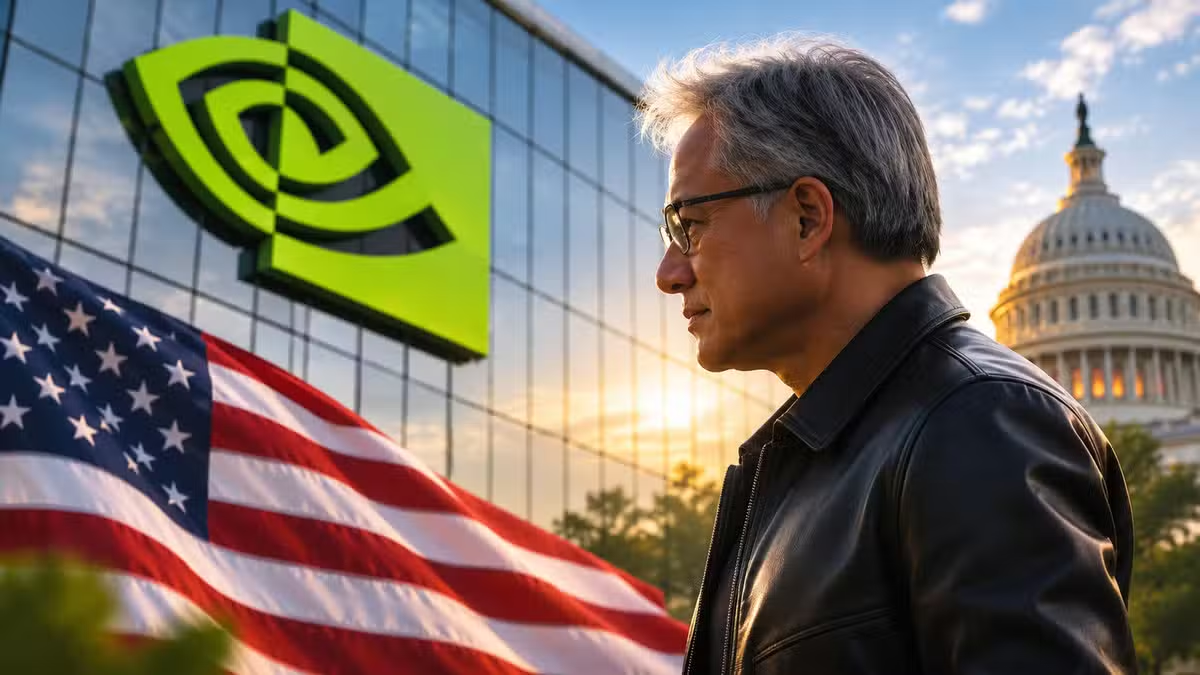
Former Nvidia CEO Jensen Huang has expressed his willingness to return to the company, linking any potential comeback to the interests of shareholders, employees, Nvidia itself, and the United States. His remarks come as the semiconductor giant faces growing challenges involving technological development, global competition, and geopolitical tensions.
In his first public statement since stepping down, Huang said he would consider returning to the chief executive position if Nvidia’s board believed his leadership would benefit the company and its wider stakeholders.
However, the board has reportedly rejected calls for his reinstatement and indicated that it does not intend to reverse its decision. This leaves uncertainty over whether Huang will have any formal leadership role at the company again.
Huang Highlights His Connection to America
A major part of Huang’s statement focused on his personal connection with the United States and the opportunities the country provided throughout his career.
He recalled arriving in America 53 years ago and described becoming a US citizen as one of the proudest moments of his life. Huang also credited the opportunities available in the country for helping him build Nvidia into one of the world’s leading semiconductor companies.
He described Nvidia as his life’s work, highlighting the close relationship between his personal journey and the company’s development. His comments suggested that any decision about returning would involve more than his own professional ambitions.
By specifically mentioning America’s interests, Huang also drew attention to Nvidia’s importance within the country’s technology sector. The company has become a major player in the global semiconductor industry, particularly through its advanced chips used in artificial intelligence and high-performance computing.
Nvidia Faces Technology and Geopolitical Challenges
Huang also referred to the wider challenges confronting Nvidia, including rapid technological changes, market pressures, competition, and geopolitical developments.
The semiconductor industry has become increasingly important to national economic and security priorities. Advanced chips are essential for artificial intelligence systems, data centres, advanced computing, and several other strategic technologies.
As competition intensifies among global technology companies, Nvidia faces pressure to maintain its position in an industry that is changing quickly. Developments in international trade policies and geopolitical relations can also influence access to markets, manufacturing resources, and customers.
Huang’s remarks connected these business challenges with the broader interests of the United States. His position reflects the importance he places on Nvidia’s role in the country’s technology ambitions.
Board’s Decision Leaves Return Uncertain
Despite Huang’s willingness to consider a comeback, Nvidia’s board has reportedly maintained its position against reinstating him. The board’s response indicates that his return is not currently part of its plans.
His statement nevertheless highlights the significance of leadership decisions at major technology companies, particularly those operating in strategically important industries.
For now, there is no confirmed indication that Huang will resume the CEO position. Any change would depend on the company’s board and its assessment of what would serve Nvidia and its stakeholders.
The situation places attention on Nvidia’s future leadership as the company continues to navigate technological competition and geopolitical uncertainty.