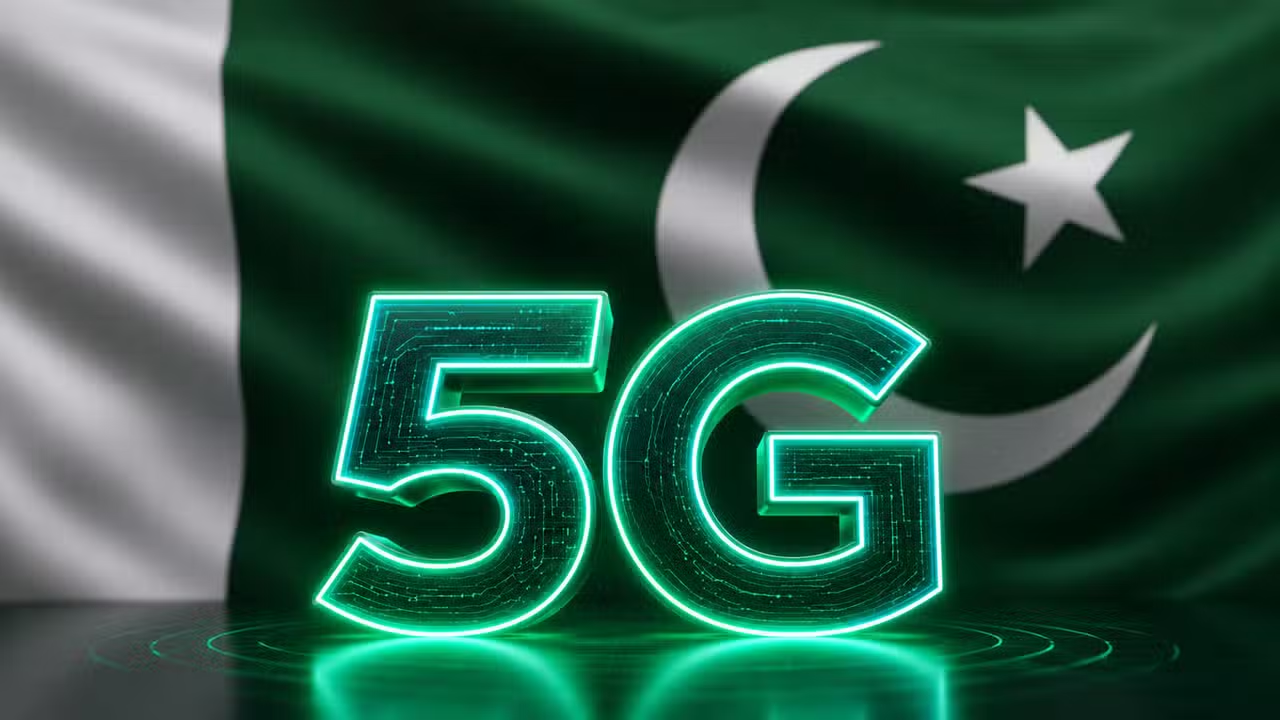
Pakistan’s 5G user base has reached approximately 1.8 million as next-generation mobile services continue expanding across the country. The development marks another step in Pakistan’s efforts to modernise its telecommunications infrastructure and improve high-speed internet connectivity.
Federal Minister for Information Technology and Telecommunication Shaza Fatima Khawaja shared the latest figures during a meeting of the National Assembly Standing Committee on Information Technology and Telecom on Tuesday.
According to the minister, 5G services have been introduced in 24 cities, providing users with access to the latest generation of mobile network technology.
The update highlights the growing adoption of advanced telecommunications services in Pakistan, where demand for faster internet, improved connectivity and reliable digital infrastructure continues to increase.
Shaza Fatima Khawaja also discussed the government’s efforts to introduce 5G technology through a spectrum auction. She said the government had conducted an auction to make the required spectrum available for the rollout of next-generation mobile services.
The minister further stated that no spectrum auction had taken place after former Prime Minister Nawaz Sharif left office, highlighting the gap in spectrum allocation during the intervening period.
The availability of spectrum is essential for mobile network operators because it provides the frequencies required to deliver wireless communication services. Additional spectrum can help operators improve network capacity, coverage and internet performance.
The introduction of 5G technology is expected to create new opportunities for Pakistan’s digital economy. Compared with previous mobile network generations, 5G is designed to offer significantly faster data speeds, lower latency and improved capacity for connected devices.
These capabilities can support several sectors, including education, healthcare, manufacturing, financial services and e-commerce. Businesses may also benefit from faster data transmission and more efficient digital operations.
For ordinary mobile users, 5G technology can improve video streaming, online gaming, video conferencing and large file downloads, provided that compatible devices and suitable network coverage are available.
The expansion of 5G services could also support Pakistan’s growing freelance and IT sectors. Professionals working with international clients increasingly depend on reliable internet connectivity for communication, cloud-based applications and digital services.
However, wider adoption will depend on several factors, including affordable 5G-enabled smartphones, competitive data packages, network availability and continued investment by telecom operators.
Infrastructure development will also remain important. Mobile companies need to install and upgrade network equipment to provide consistent 5G coverage and handle increasing demand from subscribers.
Although approximately 1.8 million users have already adopted the technology, the availability of services in 24 cities indicates that further expansion will be important for reaching a larger population.
The government’s spectrum auction is therefore a significant part of Pakistan’s broader telecommunications development strategy. Effective implementation and investment will determine how quickly the technology becomes accessible to more users.
With the latest figures presented before the parliamentary committee, attention is now turning towards the expansion of 5G coverage, affordability and the technology’s potential contribution to Pakistan’s digital transformation.