
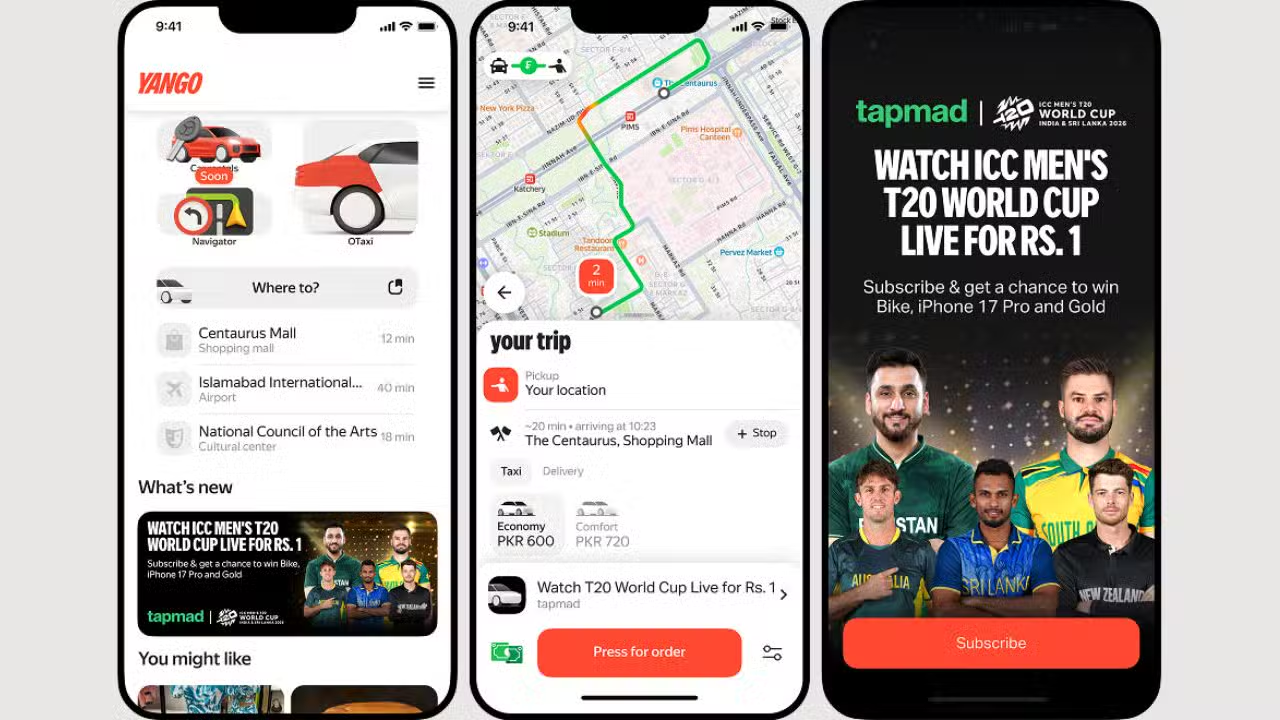
Pakistan’s digital advertising landscape is undergoing a structural shift as OTT platforms and brands increasingly move toward ecosystem-based advertising strategies. In a fragmented attention economy, advertisers are now focusing on integrated digital environments that allow repeated exposure, higher engagement, and measurable performance within a single platform ecosystem.
A recent campaign involving Pakistan’s leading OTT streaming service tapmad, Karachi-based digital agency Jack of Digital, and AdTech provider Yango Ads highlights how this model is reshaping streaming and mobile-first advertising strategies in the region.
The campaign demonstrated the growing effectiveness of super app ecosystems in driving both reach and engagement. Over a two-week period, it generated more than 2 million impressions and 1,311 clicks, surpassing its planned reach target by 6 percent. The Promostripe format emerged as the strongest performer, achieving a 2.54 percent click-through rate, nearly three times higher than the Main Banner placement.
This performance reflects a broader trend in digital marketing where contextual and persistent ad formats are outperforming traditional display placements. Rather than relying on single-channel exposure, ecosystem advertising enables brands to remain visible throughout multiple user interactions within an app environment.
The campaign was designed around a high-demand sports viewing window, leveraging the Yango SuperApp ecosystem to reach highly engaged mobile audiences. The platform integrates services such as ride-hailing, logistics, and delivery, allowing advertisers to engage users during everyday digital activities, increasing both frequency and recall.
Running from February 6 to 20, 2026, the campaign combined two distinct ad formats: a high-visibility Main Banner and a lightweight Promostripe placement that remained visible throughout the user journey. Both formats directed users to a dedicated landing page containing streaming and event details, ensuring a seamless transition from awareness to action.
The results underline a key advantage of ecosystem advertising for OTT platforms in Pakistan. While the Main Banner contributed to large-scale visibility, the Promostripe format drove the majority of user engagement, demonstrating the effectiveness of combining high-impact and persistent ad placements within a single environment.
Industry experts note that sports audiences in Pakistan are increasingly mobile-first, consuming content across multiple apps during live events and peak engagement periods. This behavior has encouraged streaming platforms to rethink traditional digital acquisition models and adopt more integrated advertising strategies.
According to campaign stakeholders, ecosystem-based advertising allows brands to reach users at multiple touchpoints without depending solely on external traffic sources. This approach not only improves engagement rates but also enhances brand recall through repeated exposure within a controlled digital environment.
The trend also reflects broader changes in global advertising behavior, where super apps are becoming central to digital marketing strategies. As users spend more time within integrated ecosystems, advertisers are prioritizing platforms that combine scale, frequency, and contextual targeting in one place.
With strong performance metrics and growing industry adoption, ecosystem advertising is expected to play a more significant role in Pakistan’s OTT and digital media landscape in the coming years, particularly as competition intensifies for mobile-first audiences.