
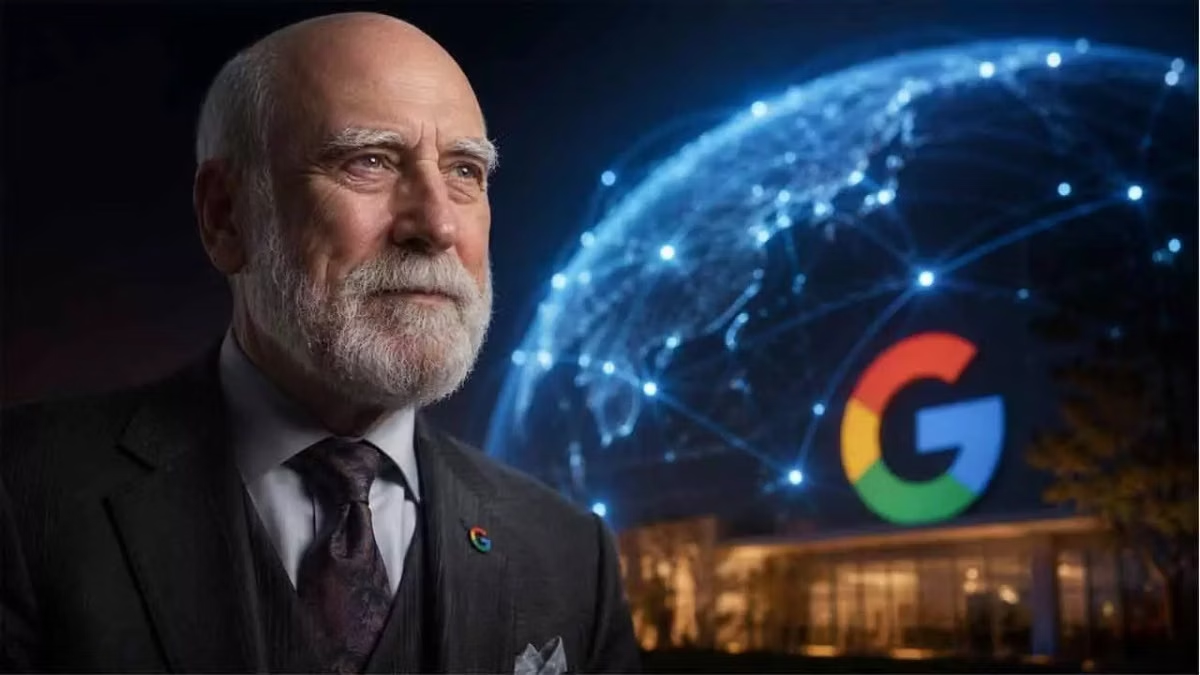
Vinton Cerf, widely known as one of the “Fathers of the Internet,” is set to retire from his role as Google’s chief internet evangelist next week, marking the end of a remarkable career spanning almost 60 years in the field of computing and digital communication.
His departure also closes more than two decades at Google, where he played a key role in shaping discussions around internet policy, accessibility, and long-term technological development.
Cerf, along with computer scientist Robert Kahn, is credited with designing the foundational networking architecture of the modern internet. The duo developed the TCP/IP protocol suite, a system of rules that enables different devices and networks to communicate seamlessly across global digital infrastructure.
Originally developed in the 1970s, TCP/IP became the backbone of the internet as it expanded from a research project into a worldwide communication system. Cerf’s early contributions helped transform the internet into the interconnected platform that now supports billions of users, services, and devices.
His work laid the groundwork for nearly every aspect of modern digital life, from email and web browsing to cloud computing and mobile connectivity. Over the decades, TCP/IP has remained the standard protocol powering global internet traffic.
Throughout his career, Cerf has received some of the highest honors in science and technology. These include the ACM A.M. Turing Award, often referred to as the “Nobel Prize of Computing,” and the Presidential Medal of Freedom. He has also been awarded numerous honorary doctorates from leading universities worldwide.
As internet usage continues to evolve with emerging technologies such as artificial intelligence, 5G networks, and satellite connectivity, Cerf’s legacy remains deeply embedded in the architecture that supports modern digital ecosystems.
His retirement marks the end of an era, but his contributions continue to influence how the world connects, communicates, and shares information in the digital age.